
TIS FORUM AT PERUMIN HIGHLIGHTED NEW PERSPECTIVES FOR MINE PLANNING AND UNDERGROUND EXTRACTION METHODS

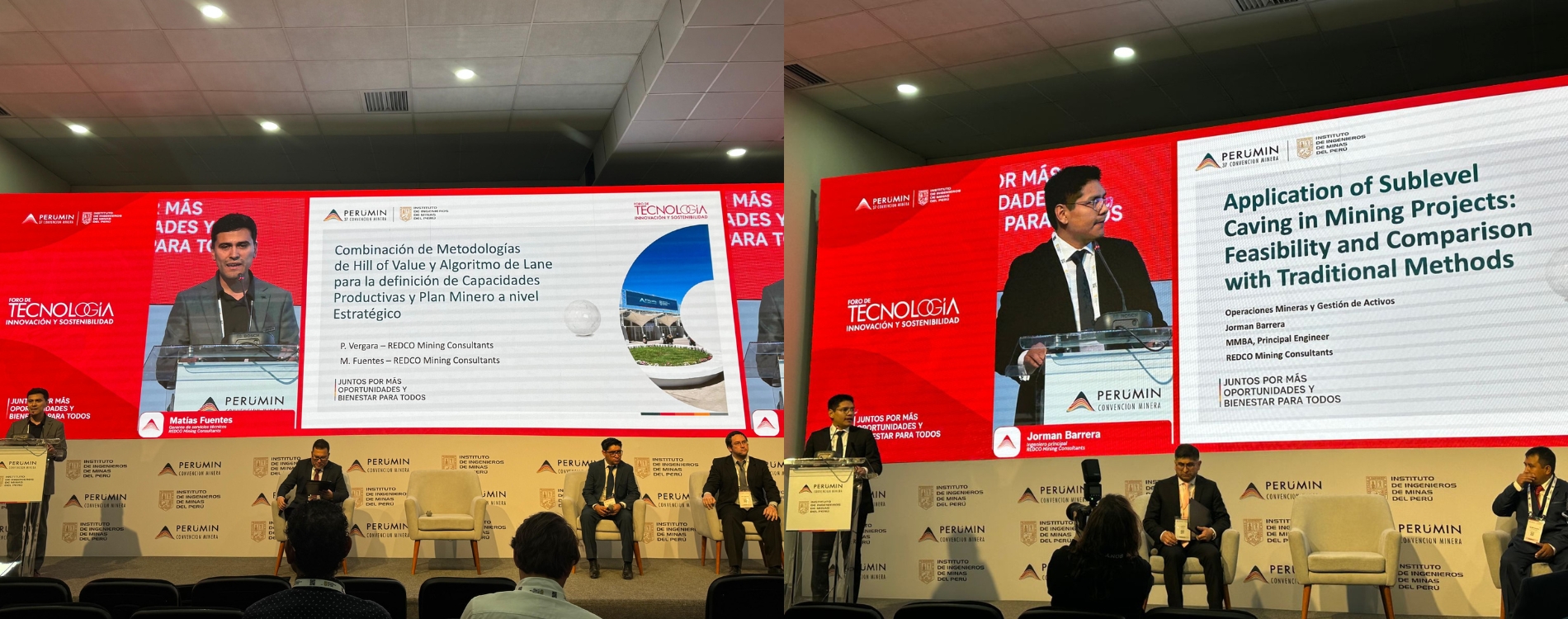
The Technology, Innovation and Sustainability (TIS) Forum at PERUMIN 37 was once again one of the most anticipated spaces of the mining convention. There, specialists from different parts of the world shared advances aimed at making mining a more productive, efficient and sustainable industry. In this setting, two presentations drew particular interest among attendees.
The first was delivered by Matías Fuentes, Technical Services Manager, who presented the paper “Combination of Hill of Value Methodologies and Lane Algorithm for the definition of Production Capacities and Mine Plan at a Strategic level”. In his talk, he explained how the integration of both tools makes it possible to underpin a project’s production capacity with greater precision and to apply dynamic cut-off grade strategies, which in practice improve economic value compared with traditional approaches.
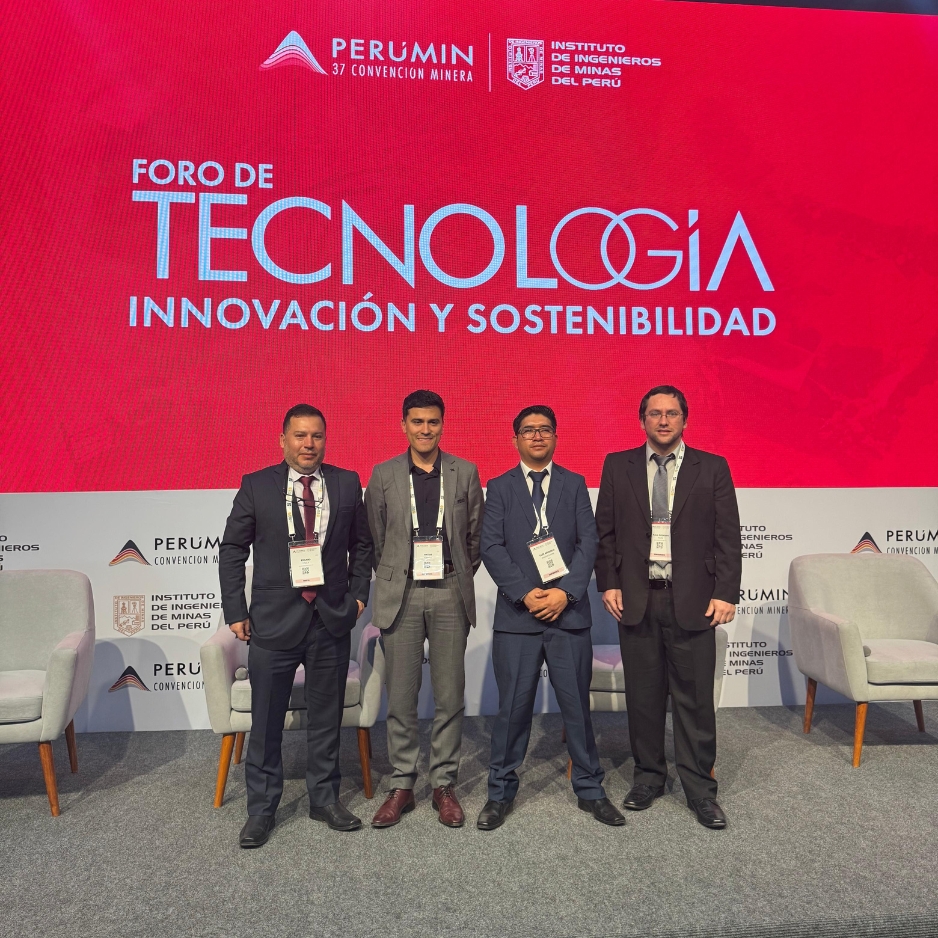
The work also showed how this methodology, developed by REDCO, narrows the gap between exploratory analysis and prefeasibility studies. In recent projects, the results have demonstrated increases of between 3% and 6% in Net Present Value, validating its usefulness as a strategic technique in the early stage of mine design.
For his part, Jorman Barrera, Principal Engineer, presented “Application of Sublevel Caving in mining projects: viability and comparison with traditional methods”. His presentation analyzed the potential of this underground method against alternatives such as Sublevel Stoping, highlighting that it offers greater resource recovery, lower operating costs and a clearer path towards the automation of underground operations.

The study also showed that the Sublevel Caving variant with preconditioning through hydraulic fracturing not only improves the safety and control of processes, but can increase a project’s profitability by more than 10% compared with conventional methods. This positions it as an especially attractive alternative for complex, large-scale orebodies.
Both papers received the attention of academics, professionals and representatives of mining companies, who valued the applied nature of the work and its direct contribution to the discussion on productivity and sustainability. In this way, the participation in the TIS Forum became an opportunity to reaffirm the role of mine engineering in the search for innovative solutions that respond to the industry’s challenges.